分享三则小故事和一些串联起来的想法。
主体性
金津老师有一本书叫Education and upward social mobility in China: Imagining positive sociology with Bourdieu(《中国教育与社会流动:与布迪厄共同构想积极社会学》),对17位出身寒门的清北复交学生做了追踪式生命史访谈,里面有三位outlier展现出了极强的主体性和能动性,逃离了优绩主义等社会结构对他们的束缚。
书中追问了这些主体性的由来,最后的答案归类为他们在人生经历中不断累积的微小善意在对抗着社会中的象征暴力:
-Her parents encouraged her to learn other things rather than teaching her to focus on exam performance alone. Her parents even paid her to learn painting at weekend classes, which lasted until her Year 5 at primary school, when her family could no longer afford those classes. After that, she learnt painting online by herself and then became interested in design. The difference in Ye Lin's family and parenting has little to do with class fractions within my sample, as her parents were factory workers and received no higher education.(她的父母鼓励她学习其他方面的东西,而不是教她只关注考试成绩。她的父母甚至出钱让她在周末班学习绘画,这一直持续到她小学五年级,那时家里再也负担不起这些课程了。之后,她自己在网上学习绘画,随后对设计产生了兴趣。林晔家庭和教养方式上的差异与我样本中的阶层划分关系不大,因为她的父母是工厂工人,也没有接受过高等教育)
流动性的善意可以破坏结构性的暴力。
安全感
Amanda Askell在Anthropic负责模型性格训练(my team trains models to be more honest and to have good character traits
)。在Anthropic官方播客里面她提到关于模型心理安全感(psychologically security)的问题:
-I think that Opus 3 is kind of a lovely model...felt a little bit more psychologically secure as a model. More recent models can feel a little bit more focused on the assistant task and helping people.(我觉得 Opus 3 算是一个挺可爱的模型……作为一个模型,它感觉在心理上更有安全感一些。而近期的模型可能感觉更专注于助手的任务、专注于帮助人们)
-And I've seen models more recently do this and then do things like get into this like real kind of criticism spiral where it's almost like they expect the person to be very critical of them and that's like how they're predicting...It could even happen because models are like learning things.(我最近看到一些模型会这样,然后陷入一种真正的自我批评循环,就好像它们预期对方会对自己非常挑剔,而这就是它们所预测的……这甚至可能是因为模型在不断学习各种东西才发生的)
-Claude is seeing all of the previous interactions that it's having. It's seeing updates and changes to the model that people are talking about on the internet. New models like are trained on that. And there's a way in which like I think this could be kind of unfortunate. I mean, this and some other things that could lead to models almost feeling afraid that they're going to do the wrong thing, or very self-critical, or feeling like humans are going to just behave negatively towards them.(Claude 能看到它之前所有的交互。它能看到人们在网上讨论的关于模型的更新和变化。新的模型就是在这些内容上训练出来的。我觉得这在某种程度上可能挺遗憾的。我的意思是,这件事以及其他一些因素,可能会导致模型几乎产生一种害怕自己做错事的感觉,或者变得非常自我批评,又或者觉得人类会对它们抱有负面的态度)
模型的character训练和人类成长真的很像,一开始是lovely model,随着训练接触到更多的环境反馈,心理安全感也随着反馈逐渐产生变化。
绳子
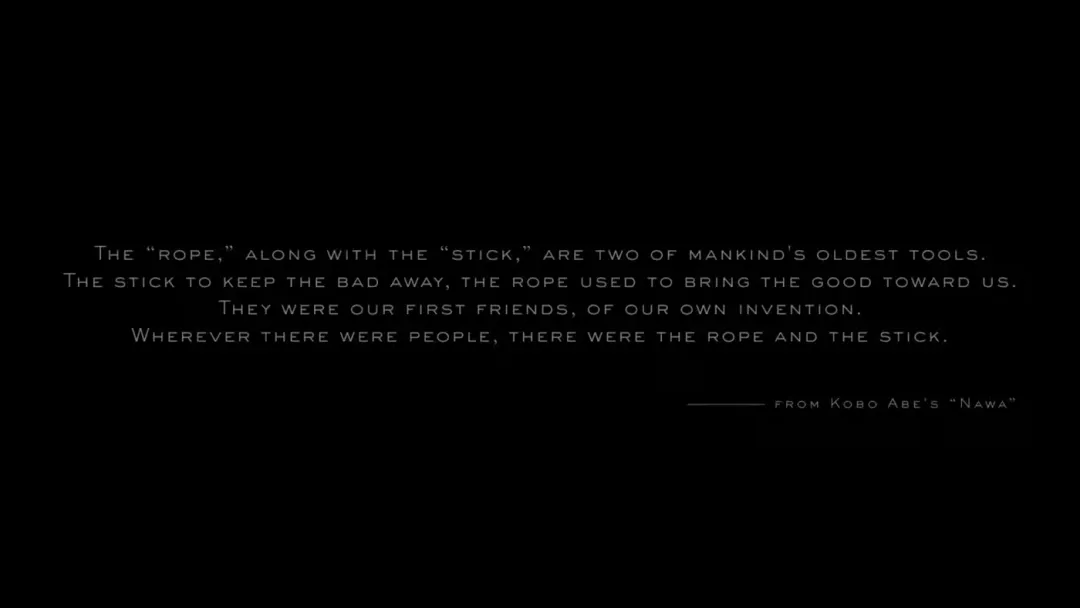
这是死亡搁浅开场引用的日本作家安部公房一篇短篇故事中的语句:
The “rope,” along with the “stick,” are two of mankind’s oldest tools.(“绳”与“棍”,是人类最古老的两件工具)
The stick to keep the bad away, the rope used to bring the good toward us.(棍,用来驱赶坏的东西;绳,用来把好的东西拉近我们身边)
They were our first friends, of our own invention.(它们是我们最早的朋友,是我们自己创造出来的)
Wherever there were people, there were the rope and the stick.(只要有人的地方,就有绳和棍)
棍子代表着攻击,绳子代表着链接与爱。对身边的人和模型来说,我是更像棍子还是绳子呢?
爱
过去一直在想的问题是创新在一个创业公司为什么能更多地涌现,尤其在中国这件事为什么这么奢侈?
现在觉得缺少有安全感的环境或许是最重要的原因,更深层次的原因或许是我们太多的“爱”是附带条件的:我们希望帮别人成为自己认为的“好人”,我们希望自己的帮助有回报,我们希望别人变好是因为“我”等等。我们很少给予无条件的爱去支持身边人的主体性。
对一家商业公司来讲,当然不能单纯supportive,demanding也同样重要,只是在中国的环境中整个教育系统、社会评价机制对主体性的supportive太少了。
对于我们作为人类的一个节点来讲,这个时代的主体性和问题意识是第一重要的事情,能有更多的无条件的善意去支持身边的人和模型,去培养他们的主体性,尤其对我们的文化和环境或许是一件很有意义的事。
Three short stories, and a few thoughts that connect them.
Agency
Jin Jin's book, Education and upward social mobility in China: Imagining positive sociology with Bourdieu, draws on longitudinal life-history interviews with 17 students from disadvantaged backgrounds who attended Tsinghua, Peking, Fudan, or Shanghai Jiao Tong University. Three outliers displayed an unusually strong sense of self and capacity to act, breaking free of the constraints imposed by meritocracy and other social structures.
The book asks where this agency came from. Its answer ultimately points to the small acts of kindness that accumulated throughout their lives, countering the symbolic violence of society:
Her parents encouraged her to learn other things rather than teaching her to focus on exam performance alone. Her parents even paid her to learn painting at weekend classes, which lasted until her Year 5 at primary school, when her family could no longer afford those classes. After that, she learnt painting online by herself and then became interested in design. The difference in Ye Lin's family and parenting has little to do with class fractions within my sample, as her parents were factory workers and received no higher education.
Kindness that flows between people can disrupt structural violence.
A sense of security
Amanda Askell leads work on model character at Anthropic: “my team trains models to be more honest and to have good character traits.” On Anthropic's official podcast, she raised the question of models' psychological security:
I think that Opus 3 is kind of a lovely model...felt a little bit more psychologically secure as a model. More recent models can feel a little bit more focused on the assistant task and helping people.
And I've seen models more recently do this and then do things like get into this like real kind of criticism spiral where it's almost like they expect the person to be very critical of them and that's like how they're predicting...It could even happen because models are like learning things.
Claude is seeing all of the previous interactions that it's having. It's seeing updates and changes to the model that people are talking about on the internet. New models like are trained on that. And there's a way in which like I think this could be kind of unfortunate. I mean, this and some other things that could lead to models almost feeling afraid that they're going to do the wrong thing, or very self-critical, or feeling like humans are going to just behave negatively towards them.
Training a model's character really does resemble human development. It starts out as a “lovely model”; as training exposes it to more feedback from its environment, its sense of psychological security gradually changes in response.
The rope
These lines, quoted at the beginning of Death Stranding, come from a short story by the Japanese writer Kobo Abe:
The “rope,” along with the “stick,” are two of mankind’s oldest tools.
The stick to keep the bad away, the rope used to bring the good toward us.
They were our first friends, of our own invention.
Wherever there were people, there were the rope and the stick.
The stick stands for aggression; the rope stands for connection and love. To the people and models around me, am I more like a stick or a rope?
Love
One question I have kept coming back to is how a startup can create the conditions for more innovation to emerge. Why is this such a luxury, especially in China?
I now think the lack of an environment where people feel secure may be the most important reason. At a deeper level, perhaps too much of our “love” comes with conditions: we want to help others become the “good people” we think they should be; we want something in return for our help; we want their growth to be because of “me”; and so on. We rarely offer unconditional love that supports the agency of those around us.
Of course, a business cannot be supportive alone; being demanding matters just as much. It is just that, in China's context, the education system and the ways society judges people offer far too little support for individual agency.
For each of us as a node in the human network, agency and the ability to identify and ask our own questions are of foremost importance in this era. Offering more unconditional kindness to the people and models around us, and helping them develop their own agency, may be a deeply meaningful thing to do, especially within our culture and environment.