写这篇文章来自今年思考的一个困扰自己许久的问题:自从领悟到connecting the dots的意义,我的平常心一方面让我内心少了非常多的痛苦与挣扎,这很棒,但是另一方面我也被困在了这个舒适圈里面,总觉得自己会走向一条命中注定的路,给自己很多的借口,导致自己好像没办法竭尽全力去做一件事情。问题出在了哪里?
最近答案逐渐清晰后,机缘巧合看到段永平也推荐了费德勒在Dartmouth的毕业演讲再次重读一遍。去年读这篇演讲和最近重读有完全不一样的体会,最让自己感慨的是,“effortless is a myth"作为第一个lesson就写在标题上。
 去年的自己却全然没有关注到这句话的意义,只是看到费德勒的第二个lesson加深了自己对平常心的理解。
lesson1: Effortless is a myth.
lesson2: It’s only a point.
lesson3: Life is bigger than the court.
【It’s only a point】
去年看这段演讲印象最深刻的话是关于费德勒比赛胜率和每分胜率的差异:
In tennis, perfection is impossible... In the 1,526 singles matches I played in my career, I won almost 80% of those matches... Now, I have a question for all of you... what percentage of the POINTS do you think I won in those matches?
Only 54%.
In other words, even top-ranked tennis players win barely more than half of the points they play.
...
When you’re playing a point, it is the most important thing in the world.
But when it’s behind you, it’s behind you... This mindset is really crucial, because it frees you to fully commit to the next point… and the next one after that… with intensity, clarity and focus.
The truth is, whatever game you play in life... sometimes you’re going to lose. A point, a match, a season, a job... it’s a roller coaster, with many ups and downs.
And it’s natural, when you’re down, to doubt yourself. To feel sorry for yourself.
...
The best in the world are not the best because they win every point... It’s because they know they’ll lose... again and again… and have learned how to deal with it.
You accept it. Cry it out if you need to... then force a smile.
You move on. Be relentless. Adapt and grow.
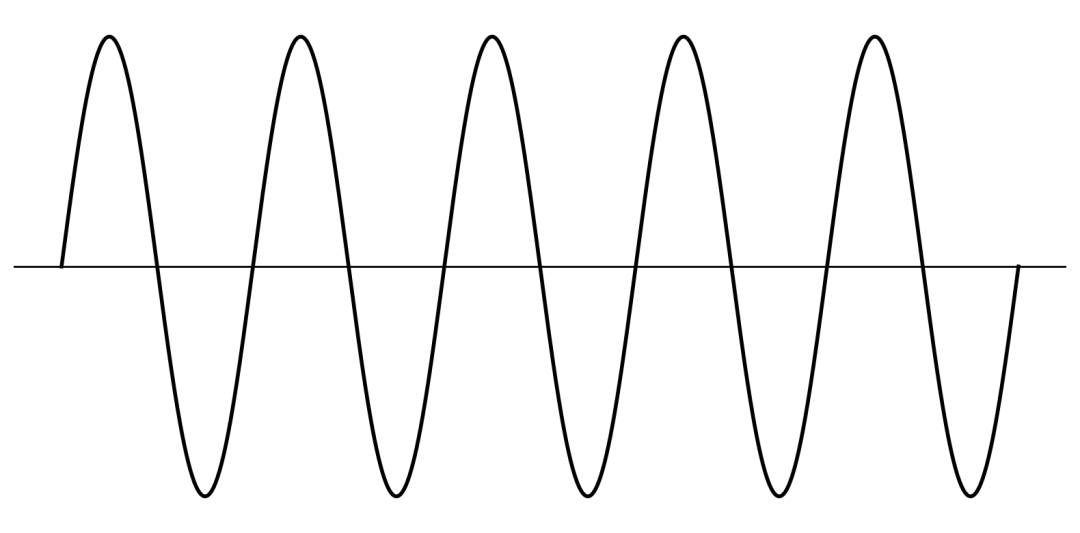
去年的理解是,即使只赢了54%的分数,最后也赢了80%的比赛,所以重要的是打完每颗球不论胜负都归零心态重新打好新的一颗球,平常心很重要不要因为一时的得失而内耗影响了一整盘的胜负。人生就像正弦曲线一样起起伏伏。
【Effortless is a myth】
最近读讲皮克斯的《创意公司》,他们信奉的两条准则分别是“story is king”和“trust the process”:
【另一条法则是“信赖过程”。之所以信奉这一法则,是因为我们可以从中得到安全感:困难和失误是任何复杂的创意事业都不可避免的,而我们往往会在工作过程中摸索出道路。】
他们对“信赖过程”实践过程中也产生了质疑和新的理解:
【我们对“信赖过程”这条法则同样满怀信心,但过程本身没能拯救《玩具总动员2》。“信赖过程”渐渐变了味儿,成了“假定问题会在过程中自动解决”。这确实给我们提供了急需的慰藉,但也诱使我们放松了警惕,变得消极被动,甚至人心涣散。
脑筋一转过弯来,我就告诉大家,这句话是毫无意义的,它分散了我们的精力,让我们疏于切切实实地解决问题。我对大家说,我们信赖的应该是人,而非过程,“过程”不会计划日程,也没有艺术鉴赏力,过程只是工具,为我们提供框架体系罢了。想要做好工作、严于自律、实现目标,我们必须担负起更多的责任,掌握更多的主动权。】
【然而,在我看来,我们要谨防被信赖诱惑而怠慢了自己肩负的责任。因为一旦落入这个陷阱,我们就会一味地重复老路,产出空洞而毫无新意的东西。】
【2000年,导演布拉德·伯德加盟皮克斯家族,他的一句口头禅是:“过程既可成人也可毁人。”我比较赞同布拉德的看法,因为他既看到了过程的威力,又考虑了人在过程中的主动性。凯瑟琳·萨拉菲安是一位自《玩具总动员》起就一直供职于皮克斯的制片人,她告诉我,相较于“信赖”过程,她觉得“引导”过程更加合理:审视进程,找出漏洞所在,然后猛烈出击,保证问题一次得到解决。在这里,掌握主动权的是人,而非过程本身。】
读到这里,我终于发现自己过往的问题在于把主动权交给了过程,忽略了自己的主动权。好的状态是既考虑到过程的威力,提供内心的力量,也需要考虑到过程中的主动性,有高的追求。
最近李想和罗永浩的访谈中李想也提到了卓越企业家的一个反共识的特征是,在选得准、看得长的基础上并不是追求完美或者有耐心地慢慢做,而是极高频率地迭代,通过与真实世界做高频次的强化学习获得反馈和成长。
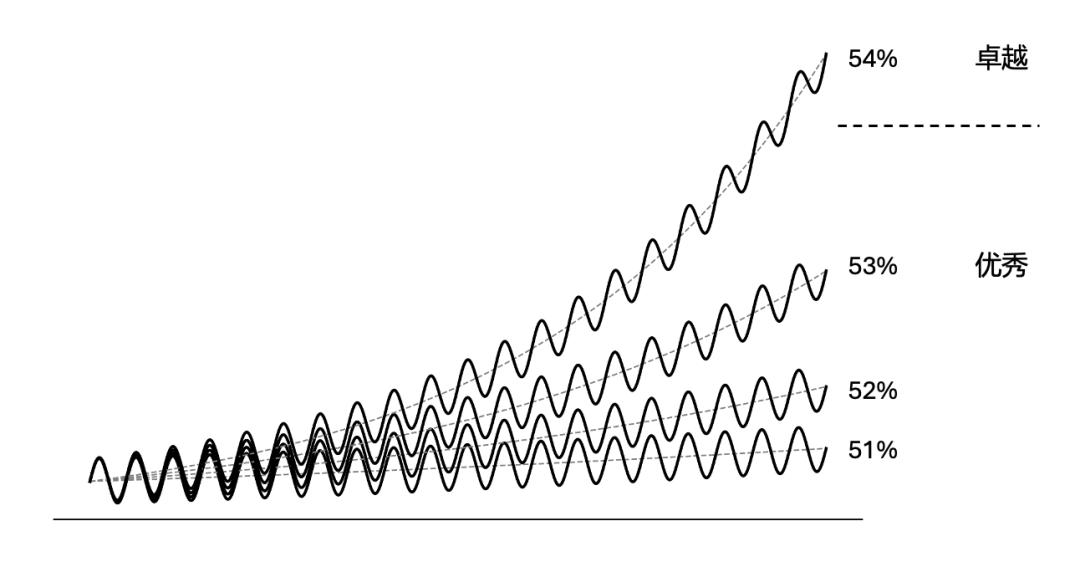
极高频率的迭代和费德勒在“Effortless is a myth”中讲的他过去刻苦训练的故事给我上了沉重的一课,他们都是主动性的体现。平常心可能会让你走向优秀,但只有叠加了主动性才能让你变得卓越。
对费德勒的例子来说,另一个视角是:要赢80%的比赛需要赢54%的分数,不是51%,不是52%,也不是53.6%。决定最后80%胜率的也是每颗球的努力。
This piece grew out of a question I have been thinking about this year, one that had troubled me for a long time. Ever since I came to understand what “connecting the dots” means, a sense of equanimity has freed me from a great deal of inner pain and struggle, which is wonderful. Yet it has also trapped me in a comfort zone. I kept feeling that I would eventually find my way onto a path that was meant for me, giving myself all kinds of excuses. As a result, I seemed unable to give anything my absolute best. Where had I gone wrong?
As the answer began to become clearer recently, I happened to see that Duan Yongping had also recommended Roger Federer’s commencement speech at Dartmouth, so I read it again. Reading it last year and rereading it now felt completely different. What struck me most was that the very first lesson, “Effortless is a myth,” was right there in the heading.
Last year, I had completely overlooked the significance of that sentence. I had focused only on Federer’s second lesson, which deepened my understanding of equanimity.
- Effortless is a myth.
- It’s only a point.
- Life is bigger than the court.
It’s Only a Point
What stayed with me most from the speech last year was the difference between Federer’s match-winning percentage and his point-winning percentage:
In tennis, perfection is impossible... In the 1,526 singles matches I played in my career, I won almost 80% of those matches... Now, I have a question for all of you... what percentage of the POINTS do you think I won in those matches?
Only 54%.
In other words, even top-ranked tennis players win barely more than half of the points they play.
...
When you’re playing a point, it is the most important thing in the world.
But when it’s behind you, it’s behind you... This mindset is really crucial, because it frees you to fully commit to the next point… and the next one after that… with intensity, clarity and focus.
The truth is, whatever game you play in life... sometimes you’re going to lose. A point, a match, a season, a job... it’s a roller coaster, with many ups and downs.
And it’s natural, when you’re down, to doubt yourself. To feel sorry for yourself.
...
The best in the world are not the best because they win every point... It’s because they know they’ll lose... again and again… and have learned how to deal with it.
You accept it. Cry it out if you need to... then force a smile.
You move on. Be relentless. Adapt and grow.
My understanding last year was that even by winning only 54% of the points, he still won 80% of his matches. What mattered, then, was to reset after every point, win or lose, and play the next one well. Equanimity matters: we should not let the inner turmoil of a momentary gain or loss affect the outcome of the entire match. Life rises and falls like a sine wave.
Effortless Is a Myth
I have recently been reading Creativity, Inc., about Pixar. Two of the principles they believed in were “story is king” and “trust the process”:
The other principle was “trust the process.” We believed in it because it gave us a sense of security: difficulties and mistakes are inevitable in any complex creative endeavor, and we often find our way through them as we work.
As they put “trust the process” into practice, they also began to question it and arrive at a new understanding:
We were equally confident in the principle of “trust the process,” but the process itself did not save Toy Story 2. “Trust the process” had gradually morphed into “assume that problems will work themselves out in the process.” It certainly gave us much-needed comfort, but it also tempted us to let down our guard, become passive, and even lose our sense of cohesion.
Once I understood this, I told everyone that the phrase was meaningless. It distracted us and kept us from doing the concrete work of solving problems. I told them that we should trust people, not the process. A “process” cannot plan a schedule or exercise artistic judgment. It is merely a tool that provides us with a framework. To do good work, maintain discipline and achieve our goals, we have to take on more responsibility and exercise more initiative.
In my view, however, we must be wary of allowing trust to tempt us into neglecting our responsibilities. Once we fall into that trap, we will simply keep repeating familiar approaches, producing work that is hollow and devoid of new ideas.
In 2000, director Brad Bird joined the Pixar family. One of his favorite sayings was: “The process can either make you or break you.” I tend to agree with Brad, because he recognizes both the power of a process and the role of human initiative within it. Katherine Sarafian, a producer who has been at Pixar since Toy Story, told me that rather than “trusting” the process, she finds it more useful to “guide” it: examine how things are progressing, identify the gaps, then attack them forcefully to make sure the problems are solved in one go. Here, it is people who exercise agency, not the process itself.
Reading this, I finally understood my own problem: I had handed over my agency to the process and neglected my ability to take initiative. A healthy approach recognizes the power of the process and draws inner strength from it, while also recognizing the need to act within that process and hold ourselves to high aspirations.
In Li Xiang’s recent interview with Luo Yonghao, Li also described a counterintuitive trait of exceptional entrepreneurs. Once they have chosen the right direction and taken a long view, they do not pursue perfection or work slowly and patiently. Instead, they iterate at an extremely high frequency, obtaining feedback and growing through frequent rounds of reinforcement learning with the real world.
That extremely rapid iteration, together with Federer’s stories of rigorous training in “Effortless is a myth,” taught me a sobering lesson. Both are expressions of initiative. Equanimity may make you good, but only when combined with initiative can it make you exceptional.
Another way to look at Federer’s example is this: to win 80% of the matches, he had to win 54% of the points—not 51%, not 52%, and not 53.6%. The effort put into every point is also what determines that final 80% win rate.